
Flex Appeal: The Benefits of Stretching
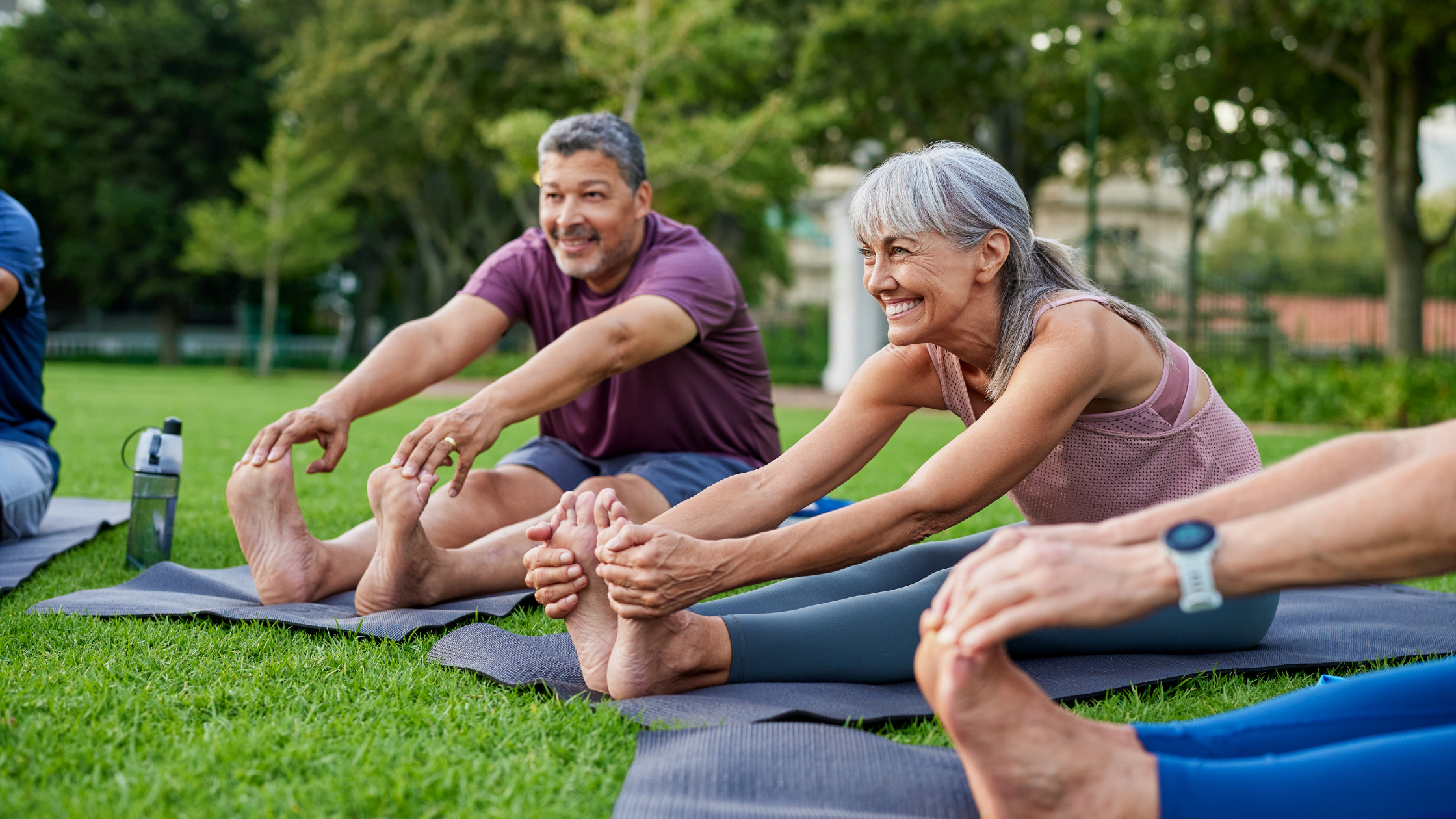
I hated to admit that my husband was right.
For years, he’s been after me to stretch – before a walk, after a walk, or just simply part of an everyday routine.
I didn’t see the point. I felt that by starting my walks at a leisurely pace for the first few minutes before picking up speed was enough to warm up my muscles. Why did I need to stretch?
Then came the groin injury.
The physical therapist echoed my husband’s advice. UGH!
It turns out that stretching is important as we age. It helps maintain mobility, balance, independence, and quality of life.
Increased Flexibility and Mobility
As we age, muscles, tendons, ligaments, and connective tissue become less elastic. And joints also undergo changes that limit our range of motion. Studies have found that flexibility can decline significantly, particularly in the hips, shoulders and spine.
When our muscles are stiffer, it makes everyday activities more difficult. It can affect posture and walking. And can lead to limited mobility, which means less physical activity - and that’s a cycle that’s just not helpful to repeat.
We all need to maintain a certain range of motion for daily tasks like:
Reaching overhead
Bending to tie shoes
Getting in and out of a car
Climbing stairs
Turning to look behind while driving
Stretching Can Reduce Stiffness and Improve Comfort
Research indicates that regular stretching can improve perceived muscle stiffness and joint comfort, making movement feel easier throughout the day.
This is especially beneficial for people who walk, garden, play golf, or engage in other recreational activities.
I’ve found that to be true.
My groin injury highlighted an area where many older adults experience problems. I’m certainly not alone.
The hips gradually lose mobility with age, especially when people spend long periods sitting, which I do at work. Apparently, sitting shortens the muscles at the front of the hips. Tight hip flexors and adductors (groin muscles) can contribute to lower back pain, knee discomfort and reduced walking efficiency. I was limping for a while and it did throw off my gait.
The stretching and mobility exercises prescribed by the physical therapist have really helped. But you need not see a physical therapist to learn the best stretching exercises. YouTube should have a ton.
The American College of Sports Medicine and the National Institute on Aging recommend that older adults perform flexibility exercises:
At least 2–3 days per week
Daily is even better, particularly for adults over 60
Hold each stretch for 10–30 seconds
Repeat each stretch 2–4 times
Accumulate about 60 seconds of stretching per muscle group
The good news is that it doesn't take long. I find I’m spending about 10-15 minutes each day.
As we age, stretching becomes less about athletic performance and more about maintaining the freedom to move. Research shows that regular stretching can improve flexibility, reduce stiffness, support better balance, and make everyday activities—from climbing stairs to getting out of a chair—easier and more comfortable. Just a short amount of time spent stretching can help preserve mobility and independence for years to come.
Something I learned the hard way - and sadly, I now have to admit that my husband was right all along.
So now I stretch every day—not because I want to become more flexible than a yoga instructor, but because I'd like to keep climbing stairs, exploring new places, gardening, and living life without unnecessary aches and pains. And if admitting my husband was right is the price I have to pay...well, I'll survive.