
Are You Talking to Me?
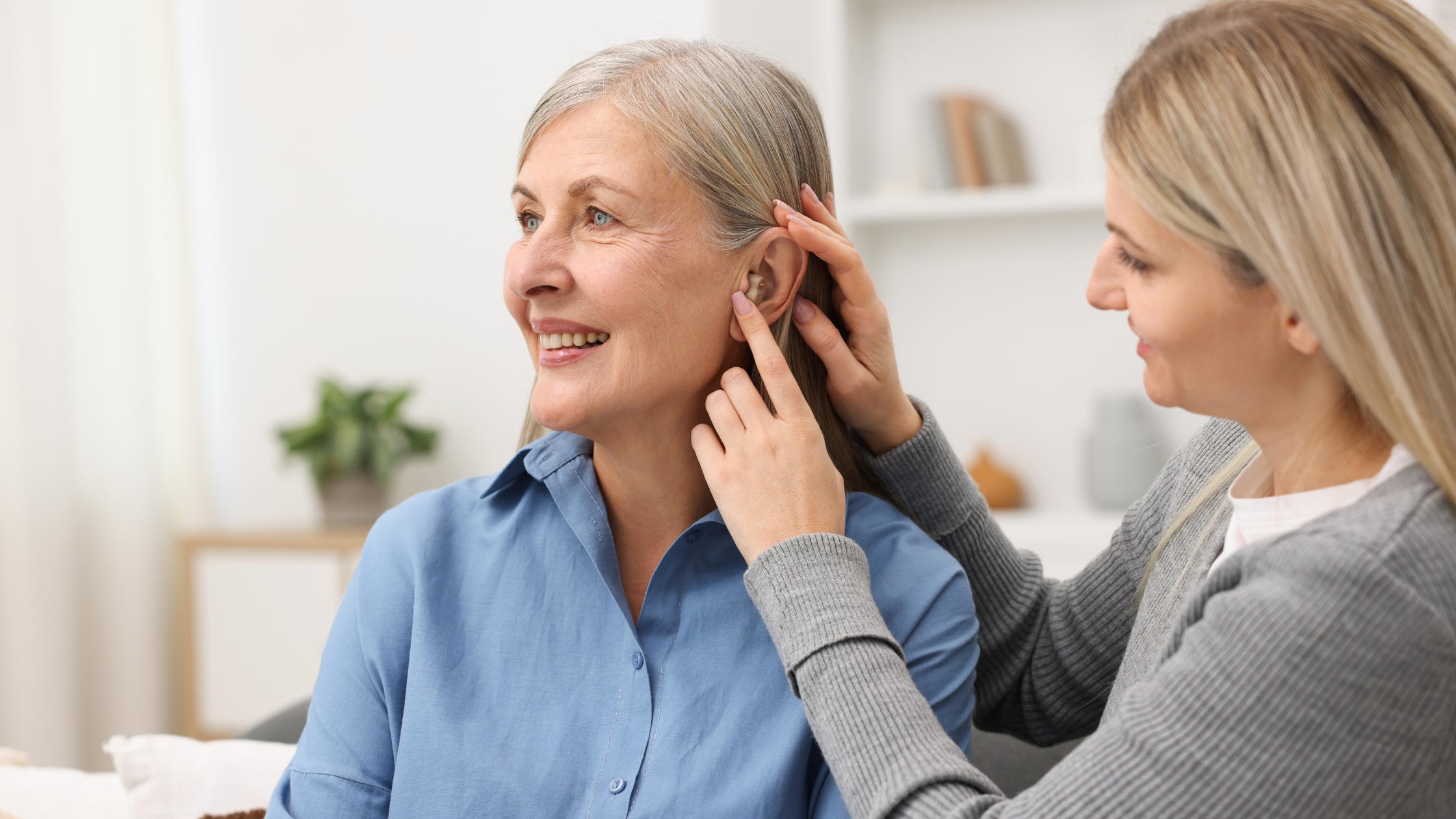
The first thing I noticed on the wall as I entered the doctor’s office was a sign: Hearing is a Health Issue.
When one does not hear the entirety of a conversation, the brain must work harder to fill in the blanks. Guessing what every other word the person is saying or misidentifying the words that are said is taxing. This overuse of brain power has severe consequences.
As stated in the Pacific NeuroScience Institute article, the Cognitive Load Theory suggests that when individuals with hearing loss struggle to comprehend speech or other auditory cues, their brains allocate additional cognitive resources to the auditory processing task. This increased cognitive load can divert resources from other cognitive functions, leading to cognitive decline over time.
The National Library of Medicine agrees. It is stated in the NIH article that growing research suggests that older adults with hearing impairment demonstrate a 30-40% rate of accelerated cognitive decline and a substantially increased risk of all-cause dementia.
Have you ever been on the phone while driving and hit a patch of bad reception? Parts of the conversation cut out, the caller’s voice goes from loud to barely audible, and you find yourself getting more and more frustrated. At some point, you just want to hang up and wait until the signal is better so you can actually hear each other.
Now imagine that is every conversation – not just while in the car with bad reception.
How isolating it is to be on the periphery of every conversation not able to fully engage for fear of misunderstanding what is being said. How hard it must be to ask people to keep repeating themselves for fear of being seen as annoying. It’s understandable that those with a hearing impairment may wish to withdraw from social engagements altogether.
Yet social interaction is healthy. Being with others enhances our emotional well-being. When a person begins to withdraw from social interactions, feelings of loneliness and depression increase.
And studies have also shown that a lack of hearing can even affect a person’s balance. How this occurs is articulated in an Audibel article. Our inner ear is not only responsible for hearing but is also an important component of balance. We rely on sounds in our environment, like traffic noise or footsteps, to help us stay oriented and aware of our surroundings. Without these auditory cues, the brain’s ability to process spatial information is diminished, leading to instability and issues maintaining equilibrium.
Hearing is a Health Issue indeed.
Which is why at the end of my mother’s consultation with the ENT doctor, I was disappointed to learn that the hearing aids that she desperately needs to stay healthy - emotionally, physically, and mentally - were not covered by health insurance.
It is a travesty that our healthcare system (or dare I say, our healthcare insurance system) is fraught with policies made by those more interested in profits than health. That compassion, medical judgment, and patient well-being are cast aside or overruled.
If hearing really is a health issue, like diabetes or heart disease, why then would the cost of hearing aids not be covered by insurance? Hearing aids help to rectify the health issues of cognitive decline, dementia, depression, loneliness, and even falls - much like insulin helps manage diabetes and statins and beta-blockers help manage heart disease.
Perhaps, it has to do with money.
Hearing loss is incredibly common as we get older — about one in three people between 65 and 74 have it, and more than half of those over 75 do. But with hearing aids costing around $3,500 on average, that’s a huge expense. Compare that to the cost of a statin drug.
Hearing is a Health Issue. Obviously, ENTs, audiologists, and speech-language pathologists are keenly aware - evidenced by the signs in their offices.
Now perhaps, we need to educate the insurance carriers of that.