
Hummingbirds
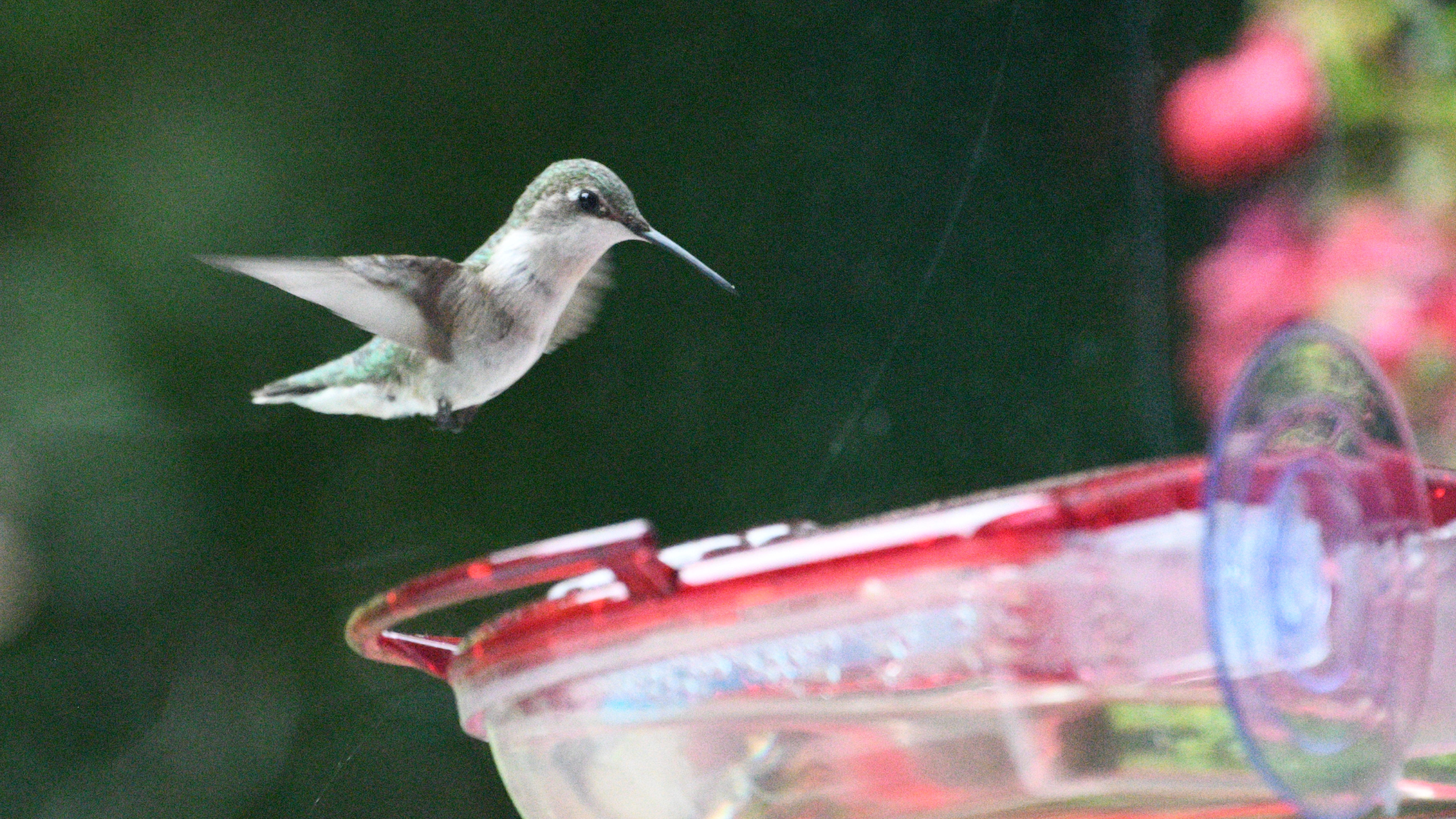
Photo by Marge Dwyer
We have a rodent problem. It’s probably not what you’re thinking.
It’s chipmunks.
Not the cute little Chip and Dale ones. No, these are bold, relentless, inquisitive, and pesky ones with an apparent mission to take over our yard. And yes, they are technically rodents.
I don’t want to offend the chipmunk enthusiasts among us - or squirrel lovers for that matter, but I’ve heard enough stories to know how destructive they can be. Getting into car engines and chewing wires to cause thousands in damage. Digging under foundations and causing cracks.
Cute? Possibly.
Destructive? Absolutely.
So what exactly do hummingbirds (the title of this article) have to do with chipmunks?
One word: seeds.
We no longer have the privilege of filling bird feeders with seed and enjoying the cardinals, orioles, chickadees, and finches that once visited daily. It attracted way too many chipmunks and squirrels.
Enter the hummingbirds.
These tiny, high-speed marvels have become our new backyard entertainment. By planting bee balm, salvia, and other hummingbird-friendly flowers — along with maintaining a steady supply of sugar water — we’ve managed to create a miniature oasis that attracts visitors without simultaneously feeding the local chipmunk population.
And it’s been worth the trade.
There’s something mesmerizing about hummingbirds. In a moment after providing fresh sugar water, a tiny emerald blur appears out of nowhere, hovering with impossible precision and with wings flapping so quickly they look like a blur before darting away. They’re delicate yet strong, graceful and territorial, and somehow capable of bringing a surprising amount of enjoyment to our day.
A Remarkable Journey
What makes them even more remarkable is the journey they take to get here. Most hummingbirds we see in the Northeast spend the winter in Central America or southern Mexico before making the long migration north each spring. Some travel across the Gulf of Mexico in a single nonstop flight — a journey that seems impossible for a bird that weighs less than a nickel.
By late April and May, they begin arriving throughout New England and the Northeast, staying through the warmth of summer and early fall. Then, almost as suddenly as they appear, they begin heading south again in September, disappearing one by one until the feeders sit like abandoned gas stations.
How to Attract Hummingbirds
Hummingbirds need an abundant food source to provide energy to fuel their fast metabolism, and their diet consists of nectar and insects. Their heart can beat up to 1,200 times per minute and their wings beat up to 80 times per second.
They are drawn to brightly colored, tubular flowers like bee balm, trumpet vine, columbine, and honeysuckle, to name a few.
They also like sugar water. Skip the store-bought red-dyed concoctions and create your own. With a mixture of one part sugar to four parts water, this sugar water is safer and more cost effective. You’ll want to boil the mixture to dissolve the sugar completely and let it cool before adding it to the feeder.
Better Homes & Gardens recommends purchasing feeders that are easy to clean, have shallow reservoirs, are easy to fill, and are designed with a red coloring that naturally attracts hummingbirds. You will want to clean the feeder every two to four days with hot water to prevent mold, which can be harmful. Once clean, replace the sugar water. It’s that easy.
As seasonal guests, hummingbirds bring a surprising amount of joy to our day. And unlike certain furry rodents, hummingbirds leave behind nothing but fascination and appreciation.